Skip to projects
BF

Computer Engineer from UFPel, Brazil. I build systems end to end and want to grow in data and integration.

Projects

Hover over (or tap) a project to see what it does, what was hard under the hood and what it is built with.

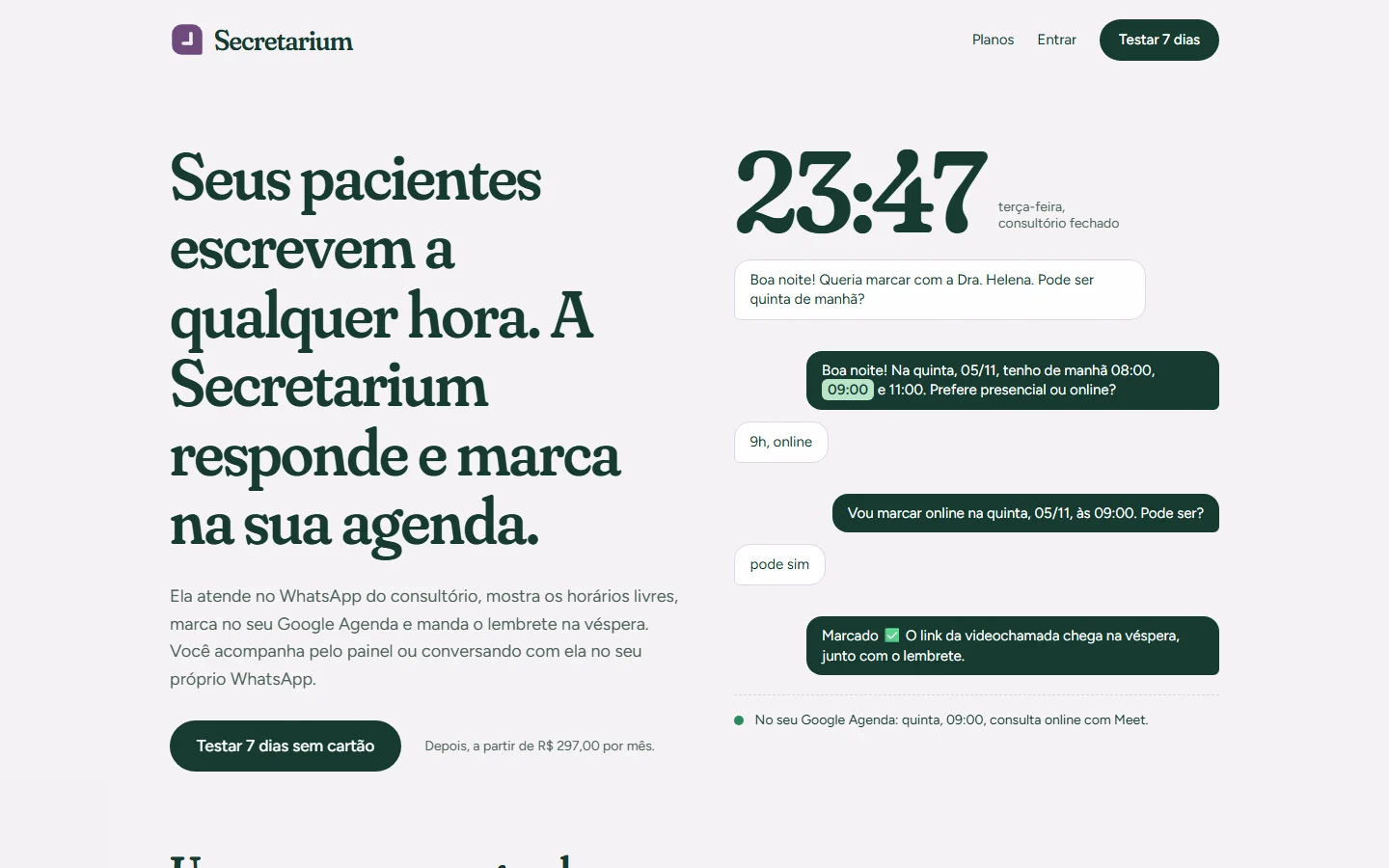
Secretarium home page: a WhatsApp chat at 11:47 pm in which the receptionist books an online appointment.

Secretarium

AI receptionist that answers patients on WhatsApp

See details

Patients write at any hour and the appointment goes straight into the clinic's Google Calendar. Up to 8 calendars per account.

What it does

  • Shows open slots and books them
  • Takes prescription requests
  • Offers freed slots to the waitlist
  • Sums up the day's schedule

The hard part

Health data. Each account only sees its own rows in the database, and the AI can only act on the phone number of whoever is talking to it.

Next.jsCloudflare WorkersSupabaseGeminiMercado Pago
Open Secretarium
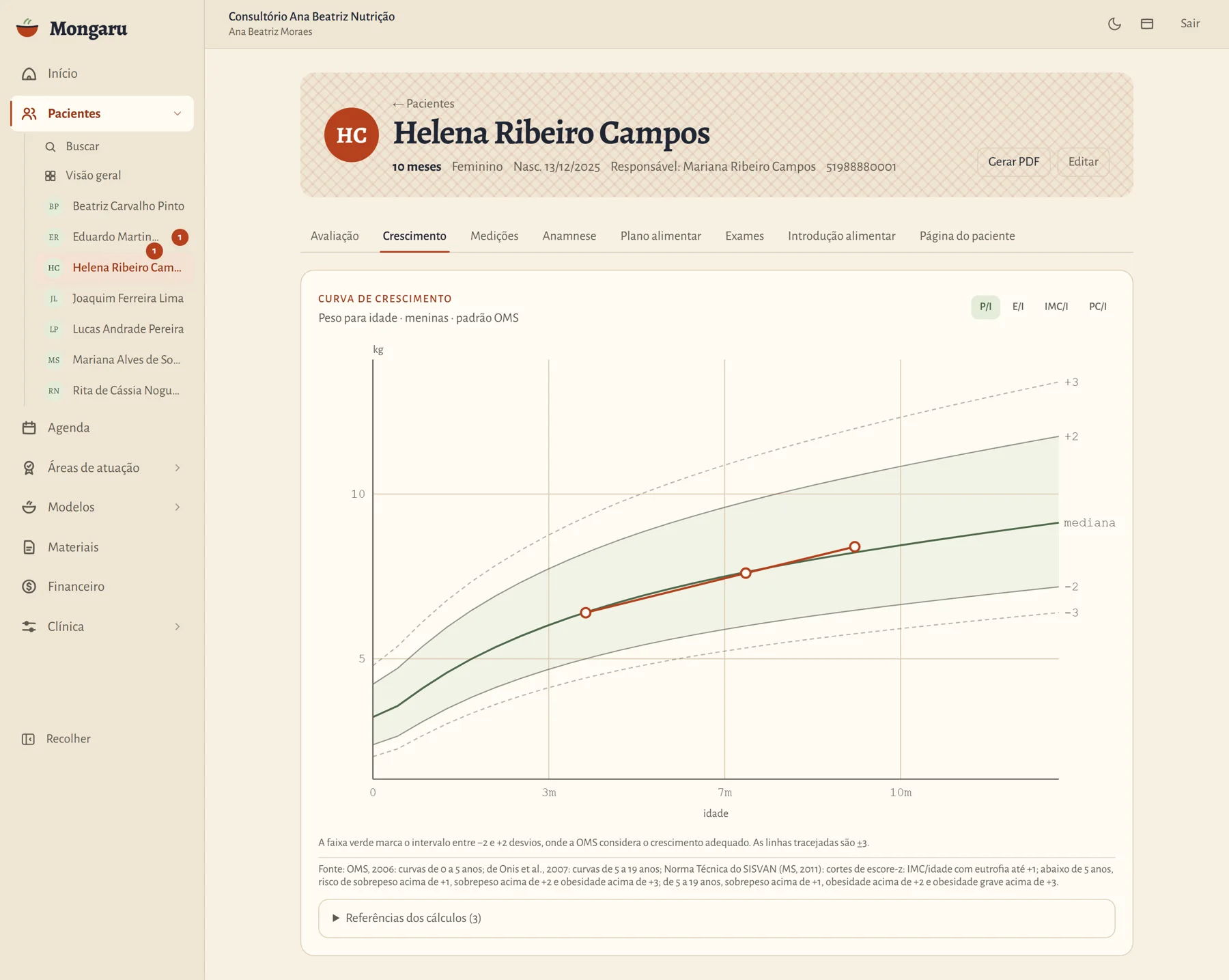
A 10-month-old patient's record in Mongaru, with the WHO growth curve.

Mongaru

A dietitian's whole practice in one place

See details

Patient records, meal plans, scheduling and billing, plus a page patients follow on their phone. On the web and the Microsoft Store.

What it does

  • Intake, lab results and measurements
  • Meal plans from Brazilian food tables
  • Scheduling, finances and billing
  • Patient page on the phone

The hard part

Getting the clinical numbers right. Every formula, like the WHO growth curves, was checked against the original document before it went into the code.

Next.jsReactSupabaseVitestC#
Open Mongaru
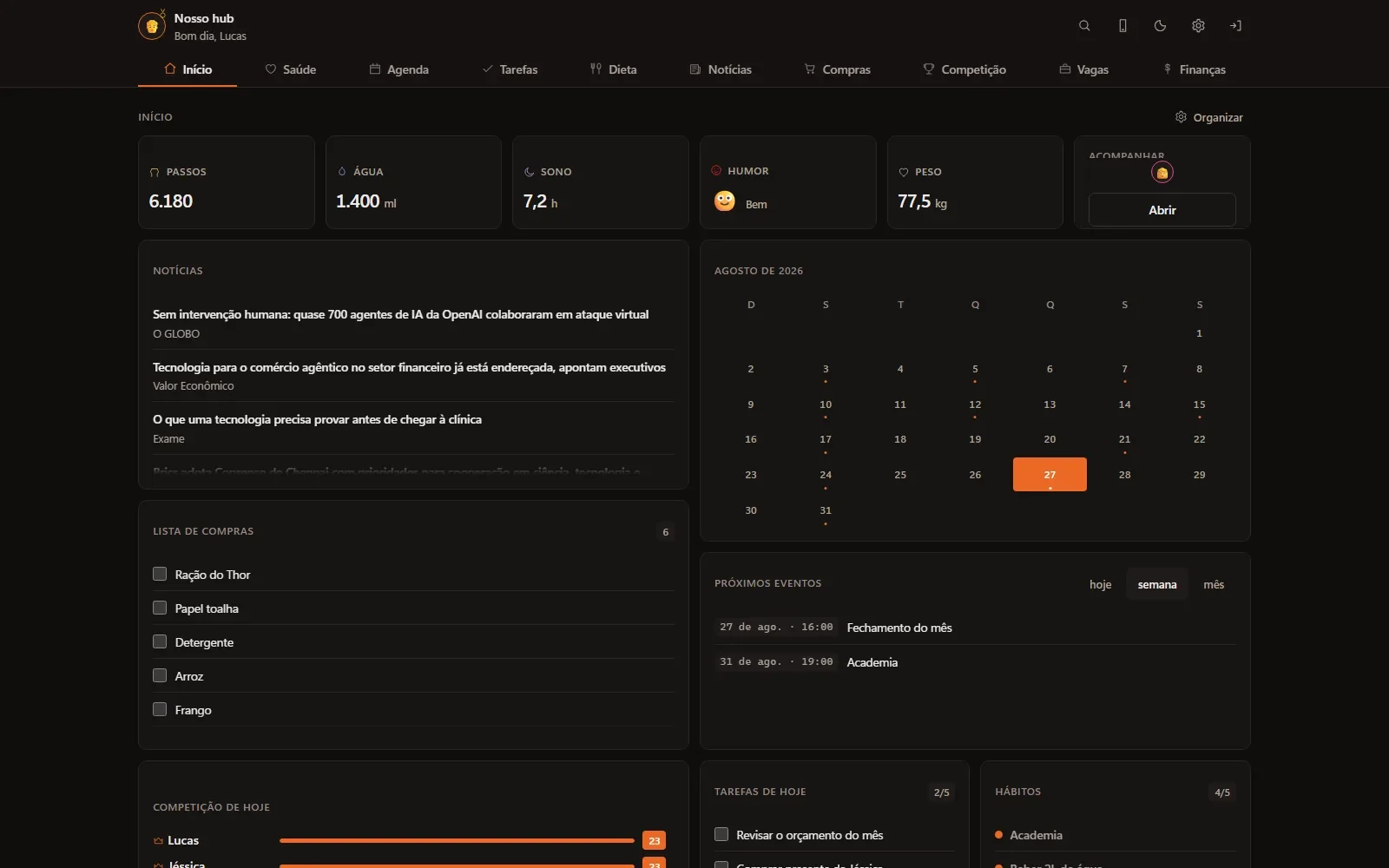
MeuHub home screen in dark mode, with steps, water, sleep, calendar, news and the day's tasks.

MeuHub

Personal dashboard for health, schedule and money

See details

Brings health, calendar, tasks, diet and finances together, with the data kept on your own computer. For Web, Windows and Linux.

What it does

  • Sleep, water, weight and habits
  • Calendar, tasks and shopping
  • Diet and personal finances

The hard part

The full cycle of a paid product: MSIX package, Microsoft Store approval, licensing and support. Over 2,000 tests.

PythonSQLiteJavaScriptWebView2Cloudflare D1
Open MeuHub

Secretarium, how it was built

Clinics lose patients who write after hours, and spend the morning confirming appointments on WhatsApp.

Decisions I made

  • Each clinic only sees its own data, enforced by the database.

    Every table carries its owner account and row-level access rules in Supabase. Automated tests try to read another account's data and must fail.

  • The AI only gets administrative tools.

    It checks slots, books appointments and logs requests. It never gives health advice, and any urgent case goes straight to the professional.

  • Patients always get an answer.

    If the AI, Google or the subscription fails, a fixed message goes out with the clinic's phone number.

  • Nothing gets in without proving where it came from.

    WhatsApp messages, payments and scheduled jobs are signature-checked before anything is read, and third-party tokens are stored encrypted.

How the pieces connect

Patient on WhatsAppwrites at any hour
Server on CloudflareNext.js on Workers, verifies the message signature
Gemini agentunderstands the request and picks the tool
Google Calendarthe clinic's schedule
Supabasedatabase in São Paulo, isolated per account
Mercado Pagomonthly subscription and access
600+automated tests
8calendars per account, one per professional
24 ha day, weekends included

Chat with the Secretarium receptionist (she speaks Portuguese)

S

Sofiareceptionist at Dr. Helena's practice

You are the patient. She answers in Portuguese, but you can write in English.

Dr. Helena's calendar

Opening the practice...

Notifications the doctor received

  • None yet. Book an appointment to see one.

This is the real Secretarium agent, with the same prompts and tools, connected to a fake practice: the doctor, patients and calendar are fictional. Do not type real data.

Mongaru, how it was built

Dietitians often keep a separate spreadsheet for everything: patient records, meal plans, scheduling and billing.

Decisions I made

  • No clinical number goes in without a checked source.

    WHO growth curves and the Brazilian TACO and TBCA food tables: each value was checked against the original document, and the citation sits in the code next to the calculation.

  • Backup before any database change.

    A database update stops if the backup fails. On top of that, an hourly copy goes to Cloudflare R2.

  • One system, on the web and on Windows.

    I wrote a C# app that brings the web system to the Microsoft Store, with its own title bar, tray icon and auto start.

  • Patients follow along on their phone.

    A separate page shows the meal plan and progress, with no access to the dietitian's dashboard.

How the pieces connect

Browserdietitian on the web
Windows appC#, MSIX package
Server on CloudflareNext.js and React on Workers
Supabaserecords isolated per account
Cloudflare R2hourly backup
Patient pageplan and progress on the phone
900+automated tests
2Brazilian food tables behind the meal plans
1 hbetween automatic backups

MeuHub, how it was built

I wanted one place for sleep, water, tasks, calendar and money, without sending that data to someone else's cloud.

Decisions I made

  • The data stays on the user's computer.

    A Python backend with local SQLite, and the web interface running inside WebView2. No cloud account holds the history.

  • Licensing without running a server.

    Validation runs on Cloudflare Workers with a D1 database. Close to zero cost and nothing to keep running.

  • A product people actually buy.

    MSIX package, Microsoft Store approval, licensing and a support page.

  • Tests before every release.

    Over 2,000 automated tests run before a new version ships.

How the pieces connect

InterfaceHTML and JavaScript inside WebView2
Python backendrules, calculations and reminders
Local SQLiteall the data, on the computer
LicensingCloudflare Workers and D1
Microsoft Storedistribution and updates
2,000+automated tests
3platforms: Windows, Linux and Web
Localthe data stays on the user's computer

Dashboards

Power BI dashboards I built in data courses, using sample datasets. Pick one below and click the image to enlarge it.

Open the PDF

All the files are also in the Google Drive folder.

Journey

From IT technician to engineer, by way of event organizing and teamwork with the Arts program.

  1. 2017 to 2021

    IT Technician

    IFSul, Camaquã campus

    Technical high school, where I took my first step into computing.

  2. 2021

    Started Computer Engineering

    Federal University of Pelotas (UFPel)

    Finished the technical program and started my degree.

  3. 2021 to Jun 2022

    Events Director

    Blaise Pascal Student Association, UFPel

    We were the bridge between students and the university. I helped organize the UFPel Hackathon, a two-day marathon between Computer Engineering and Computer Science to improve campus transportation, among many other events such as gaming competitions.

  4. Jan 2025 to Jan 2026

    Mobile front-end developer

    Roka Moka Project, UFPel

    App interfaces and database integration, in a mixed team of Computing and Arts students. I handled version control and helped shape the user experience.

  5. Oct 2026

    Graduated in Computer Engineering

    Federal University of Pelotas (UFPel)

    In my thesis I tested whether multi-agent simulation works as a decision-support tool for retail. I modeled a real store with shoppers driven by generative AI (LLM) and by classic rules, compared both against the store's real data and, on the validated model, simulated layout, promotion and service changes with no risk to operations.

  6. Jan 2026 to now

    Independent developer and founder

    MeuHub, Mongaru and Secretarium

    Three projects built as solutions for people close to me or for my own use.

Inside my thesis

For my undergraduate thesis I simulated a real 961 m² (10,300 sq ft) store, with shoppers driven either by generative AI or by classic rules. See the store as it is or test different scenarios, and tap a shopper to follow what they decide. Read the full thesis (PDF, in Portuguese)

Tap a shopper or salesperson on the plan to see their profile.

real store, April data

How will the shoppers decide?

Classic rules

  1. Draws a departmentbigger departments are more likely
  2. Browses the racksfor a time that is also drawn at random
  3. Draws whether to buya 50% chance, among items that fit the budget

No reason and no conversation: the shopper does not know why they are there.

Generative AI

  1. Gets a biographyname, age, income, family and the reason for the visit
  2. Reads the context and decidesdepartments, crowding, promotions and what the salesperson said
  3. Explains whyevery choice comes with its own reasoning

“I need new clothes for the kids and this section is empty, perfect for browsing calmly.”

Same store, same shoppers, same peak hour: only who decides changes. In the AI version, only shoppers who came to buy use the model; those just browsing stay on rules.

14:000 shoppers in the store

Speed
  • AI-driven (came to buy)
  • just browsing (rules)
  • with a salesperson
  • in the fitting room
  • at checkout
  • carrying items
  • salesperson

What did my thesis conclude?

Neither approach wins on its own. Rules work for what is mechanical; AI, for what depends on context. Together they become a tool to test ideas without touching the real store.

Classic rules

  • The store in its usual setup
  • Changes in customer flow
  • Runs in seconds, at no cost

Generative AI

  • Promotions
  • Layout changes
  • Tone of service
Hybrid approacha test environment (sandbox) to decide before changing the store

Where each one got it right

Split of sales across departments total error, lower is better

Rules: 13.7 points AI: 33.1 points
Rules

Items per purchase the real store has 2.59

Rules: 2.39 AI: 2.67
AI

Bigger kids area: department share the real store has 23.3%

Rules: 73% (overshoot) AI: 23.7%
AI

20% off shoes: department share it should go up

Rules: fell from 20.6% to 16.7% AI: rose from 16.7% to 39.6%
AI
Where both fall short

The agents were not simulated with family ties and did not shop in groups, which probably explains the missing sales in the kids department.

What each one costs

One simulated peak hour

Rules: 0 s
AI: 0 min

With AI, the same hour takes about 50 times longer, because every decision waits for the model to answer. That is why AI is used only where context matters.

US$ 0,00per simulated hour with AI (gpt-4o-mini); with rules, zero
0AI calls, at most, in a single conversation between shopper and salesperson
0 in 3shoppers uses AI: only those who came to buy; the rest follow rules

Learning

Courses I took beyond my degree, grouped by the work I want to do.

Data

  • SQL ServerHashtag Treinamentos
  • Power BIHashtag Treinamentos
  • ExcelKyle Pew, Udemy
  • Data StorytellingJoshua Brindley, Udemy

Artificial intelligence

  • AI agentsEdward Donner, Udemy
  • Agno FrameworkPedro N. Guth, Udemy
  • PythonHashtag Treinamentos

Process and business

  • Business process management (BPM)Davi Salgueiro, Udemy
  • Microsoft OfficeExattus Escola Técnica

Languages

  • PortugueseNative
  • EnglishAdvanced, Cipex Idiomas

Let's talk

I am looking for a role in data, automation or AI. I live in Porto Alegre, Brazil, and reply quickly by email or WhatsApp.